

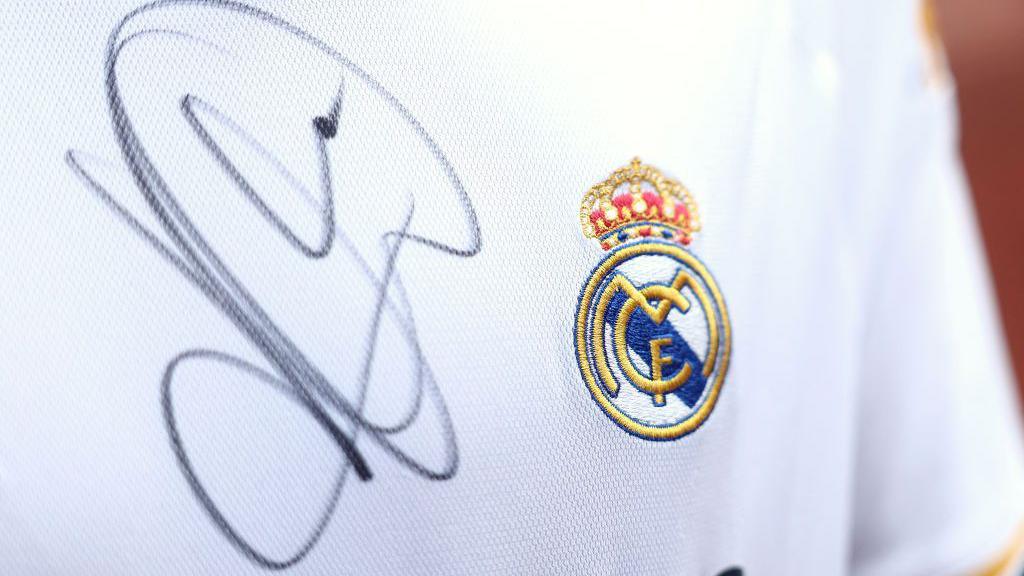
Outside the training ground. At the traffic lights. While filling up at a gas station. In a hotel lobby. Outside their family home.
The locations where soccer players and managers are confronted for autographs can vary from the mundane and understandable to the intrusive and unacceptable.
Critically, there exists two distinct types of autograph seekers. There are the genuine fans seeking a keepsake to cherish for a lifetime, but also professional vendors amassing a collection of merchandise to be listed for sale on the internet.
The individuals making a living from obtaining autographs are often experienced figures who approach players with prepared stacks of shirts and pictures, aiming to get as much signed as possible in a few seconds.
But what do the players who are targeted think, and is a portion of these encounters crossing a line?
In What Ways Do Autograph Hunters Interact With Celebrities?
When a top manager was filmed declining to autograph a jersey after a man approached his vehicle recently, he defended himself against a counter-reaction by stating he felt "exposed" and asserted some "fans are not doing it for the proper motives".
In another case, a celebrated manager angrily chastised a cluster of hunters who came up to him in a car park near his home, criticizing their profession and stating, "Don't come again - This is my final warning. What are your dreams?"
The sports memorabilia industry is believed to be valued in the billions of dollars worldwide each year, highlighting the significant income professional hunters can earn by consistently pursuing celebrities.
Clubs sometimes have to intervene and safeguard players, including banning commercial dealers from operating near practice facilities, providing security staff at nearby gas stations where hunters know players stop, and in certain instances assisting in guiding them home.
One well-known player was filmed telling hunters to stop following him to his house after they had engaged in this on back-to-back days.
And earlier this month, a backline player was recorded comically scribbling unenthusiastic signatures on a set of jerseys given to him by a seeker who approached him at his vehicle's window.
"Athletes become extremely annoyed with it," says a former Premier League winner.
"I've encountered it numerous times. They wait near the broadcast studio and request that I autograph a dozen identical shirts all at once. I challenged it the other day and said 'you're going to sell these online, correct'?"
"It's so annoying that the intention is to profit out of players. It's up to the individual to make a judgement call on the spot."
"If we say no, then the rejected individual will often insult the person who turned them down and call them out them on social media."
"This behavior is unacceptable as genuine fans must get fed up with these imposters who are acting for the wrong reasons."
"These people ruin the experience for kids and true supporters."

How Do Players Think About Commercial Dealers?
The majority of athletes are pleased to make a fan's day by spending a brief instant with them and providing a signature.
But when regular hunters appear, confrontations can occur, especially if their behaviour is deemed aggressive.
"You encounter the individuals who are desperate for your autograph but also want to spend a bit of time with you and establish a personal link," says a former England international. "That is perfectly acceptable, but then you also get the individuals that you see repeatedly."
"Some of them are quite savvy with the way they do it - they have their children approach, or they bring their mates."
"Instances have occurred when arguments have happened. I recall one where a man tried having a go with me - he would present you with 20 of the identical item, and you would either refuse to sign the entire stack or your autograph would become less enthusiastic as it went on because you knew he was going to sell them on."
In some instances players can sympathise with the reasoning while not accepting rudeness.
"He would frankly admit he was going to sell them, but in his eyes that would cover the cost of his tickets," the former player continues. "Most fans are really respectful and thankful. They are never disrespectful until they don't get what they desire."
Is a Portion of Genuine Fans Becoming Less Respectful?
Throughout the growth of women's football, fans have historically enjoyed more direct interaction to players than in the premier league. For the majority of the time, those interactions are friendly, secure, and courteous.
But some players feel interactions have become progressively less polite and disrespectful in the past few years.
One national team player disclosed she was approached for autographs by some of the same fans who had earlier jeered her during a match.
"There does seem to have been a shift in the past few years - there seems to be more of a sense of entitlement with some fans now," says a ex-professional athlete.
"Fans enjoying greater proximity to players has been a big part of the distinct character of the women's game, and when I was playing we always aimed to be available for them," she explains.
"More recently, some individuals feel because they've bought admission they are entitled to the attention of the players around the game."
"No athlete wants to ignore the fans, but there are times and places, and potential security risks need to be considered."
"There has to be mutual respect and it should be managed in a secure, regulated environment."
"You have to still have those moments so that aspiring players don't lose heart and think 'my heroes don't care about me'."
Fans Risk Buying Fakes Online
Items autographed by big stars and then listed online by autograph hunters can fetch many thousands of pounds.
But not every piece of signed memorabilia bought will prove to be legitimate.
In some cases, online stores are set up by scammers who create fakes by buying merchandise before applying a fake signature - either by doing so themselves or hiring the services of expert handwriting copiers.
One reason dishonest sellers can get away with their schemes is because autograph verification is an non-standardized procedure in many regions. Most items come with a certificate of authenticity, but that document is only as credible as the company which issues it, and those entities can be completely unvetted.
Several years ago, a individual was jailed after making more than £1m from peddling fake


